The Challenge
Corporate office staff primarily face shallow chest breathing caused by stress and sedentary sitting, which restricts oxygen intake and leads to daytime mental fatigue, physical muscle tension, and a lack of focus.
The Core Challenges of Office Fatigue
- Shallow Respiration: Stress and long hours hunched over computers cause air to stay only in the top third of the lungs, reducing vital oxygen and nutrient delivery to the body and brain.
- Sedentary Strain: Prolonged sitting stiffens the spine and tightens the neck, shoulders, and back, draining physical vitality.
- Mental Burnout: High cognitive demands trigger a constant low-level “fight-or-flight” response, clouding focus and causing afternoon exhaustion.
The Answer

Tibetan artworks improve how office staff breathe by serving as visual anchors that disrupt unconscious breath-holding and trigger slow, deep diaphragmatic respiration. In fast-paced corporate environments, staff frequently experience “email apnea”—a phenomenon where stress causes people to shallowly pant or completely hold their breath. Viewing traditional Tibetan art patterns addresses this physical stress response through structured psychological and biological mechanisms.
1. Mandalas Act as Visual Breath Pacers
- Geometric Centering: The highly organized, symmetrical geometry of a Tibetan Mandala draws the eye directly toward a central point. This visual focal point slows rapid eye movement, which instantly suppresses the sympathetic nervous system’s “fight-or-flight” response.
- Rhythmic Tracing: Staff naturally trace the concentric circles and repetitive patterns with their eyes. This rhythmic visual tracking prompts the respiratory system to match that cadence, shifting shallow chest breathing into deep, measured belly breaths.
2. Mild Vase Breathing (Kumbhaka)
Vase breathing normally involves holding the breath vigorously, but a mild version works perfectly as a silent concentration booster while reading complex documents or preparing presentations.
- “Inhale deeply and hold the breath in the lower belly (resembling the vase filled with prana).” as taught in Tibetan Yoga Practices.
- How to do it: Gently inhale through your nose, drawing the air deep into your lower abdomen. Softly contract your pelvic floor and lower abdominal muscles to “lock” the air in place, visualizing it as a warm vase sitting below your navel. Hold the breath for a comfortable, non-straining duration (5–10 seconds), then exhale completely and softly through your nose.
3. Thangkas Disrupted Stress-Induced “Email Apnea”
- Breaking Cognitive Loops: Intricate Thangka scrolls filled with deities or depictions of the natural elements encourage micro-breaks. Looking away from a computer screen at a complex, narrative artwork forces a momentary cognitive pause.
- Subconscious Sighing: This visual escape induces a “physiological sigh”—two quick inhales followed by a long exhale—which resets the lungs and instantly clears accumulated carbon dioxide from the lower airways.
High Quality Artworks
Tibetan Prana breathwork practices (traditionally known as Pranayama or Tsa Lung) heal office fatigue by clearing energetic blockages and resetting the nervous system through rhythmic, forced-air clearing cycles. This active breathing style forcefully pushes stagnant, low-oxygen air out of the lungs to instantly trigger physical and mental alertness.
Mechanistic Benefits of Tibetan Prana Artworks
- Flushes Stagnant Carbon Dioxide: Deep, forceful exhalations empty the lower lungs of stale air that builds up during hours of shallow desk sitting.
- Balances the Left and Right Brain: Alternate nostril patterns harmonize the nervous system, reducing executive stress while sharpening logical focus.
- Activates the Vagus Nerve: Lengthened, intentional breathing cycles flip the body from a stressed “fight-or-flight” state into a calm, energized state.
- Rejuvenates Cellular Energy: Increased oxygen saturation delivery to the bloodstream naturally fuels mitochondria, mimicking the revitalizing effects of a short walk.
Two-Minute “Desk-Friendly” Tibetan Prana Routine

You can practice this modified version of Tibetan clearing breaths right at your computer to instantly break a midday fatigue slump:
- The Alignment: Sit up straight away from the back of your chair, placing your feet flat on the floor.
- The Cleansing Exhale: Inhale deeply through your nose, then form an “O” shape with your lips and blow the air out powerfully in three short, sharp bursts.
- The Alternate Channel Breath: Close your right nostril with your thumb. Inhale deeply through the left. Switch to close the left nostril, and exhale smoothly through the right. Repeat this back and forth 5 times.
- The Retention Hold: Take one final deep breath in, hold it gently for 5 to 10 seconds while relaxing your shoulders, and let it out with a soft sigh.
Tibetan prana breathing techniques can be used in an office workspace, provided you select the appropriate subtle methods that do not disrupt your colleagues or require intense physical movement. While advanced practices like Tummo (inner fire) or Yantra Yoga require significant movement and breath retention, several foundational Tibetan breath control practices can be seamlessly integrated directly at your desk.
Best Tibetan Techniques for the Office

| Technique | Office Placement | Primary Benefit |
| Nine-Round Breathing | Desk / Before Meetings | Clears brain fog & frustration |
| The Breath of Power | Private Office / Breakroom | Replenishes physical energy |
| Vase Breathing (Mild) | Desk / During Inbox Clears | Enhances deep focus & centering
1. The Nine-Round Breathing Cycle (Lung Jong)
This is the most practical Tibetan technique for an office environment because it is quiet, discreet, and specifically designed to clear away toxic emotions, stress, and mental clutter.
- How to do it: Sit up straight at your desk with your feet flat on the floor.
- The Process: Use your right index finger to gently block your right nostril. Inhale deeply and smoothly through your left nostril, imagining clean, vitalizing energy entering your body. Swap fingers to block your left nostril, and exhale slowly and completely through the right, imagining stress, anger, or fatigue leaving you.
- The Cycle: Repeat this 3 times. Switch sides (inhale right, exhale left) for 3 rounds. Finally, breathe in and out through both nostrils simultaneously for 3 rounds.
2. The Breath of Power
If you hit a afternoon energy slump but want to avoid a third cup of coffee, this technique helps quickly recharge your system, though it requires a slightly forceful exhale best practiced in a private workspace or empty conference room.
- “The breath of power develops mental clarity, purifies the blood, and builds strong, powerful lungs.” according to Yoga Flavored Life.
- How to do it: Stand up tall with your arms relaxed at your sides. Take a massive, deep breath through your nose to full capacity. Hold the breath comfortably for 10 to 15 seconds. Exhale forcefully through your mouth with your lips tightly pursed, drawing your stomach inward to push all the stagnant air out.

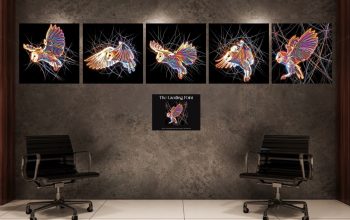
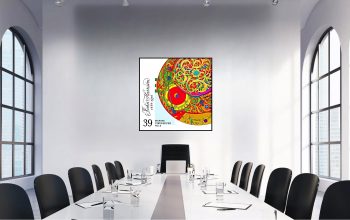
Large format display options are available with a choice of colour palettes.
Custom-crafted designs featuring integrated messaging for your workspace.
Available in Acrylic Glass, Canvas, and Acoustic Photo Panels (optional extra).
Workplace Tips & Etiquette
- Prioritize Stealth: Stick to the Nine-Round Breathing cycle if you work in an open-plan layout, as it looks exactly like a worker resting their head on their hand while reading a monitor.
- Keep It Brief: You do not need a 30-minute block; taking just 2 to 3 minutes between intense projects or right before a major meeting is enough to stabilize your nervous system.
- Maintain Spine Health: Office chairs often induce slouching. Before beginning any Tibetan technique, sit on the edge of your seat to unlock your pelvis and straighten your spine.
Limited Edition Artworks
by Stamp Art Gallery

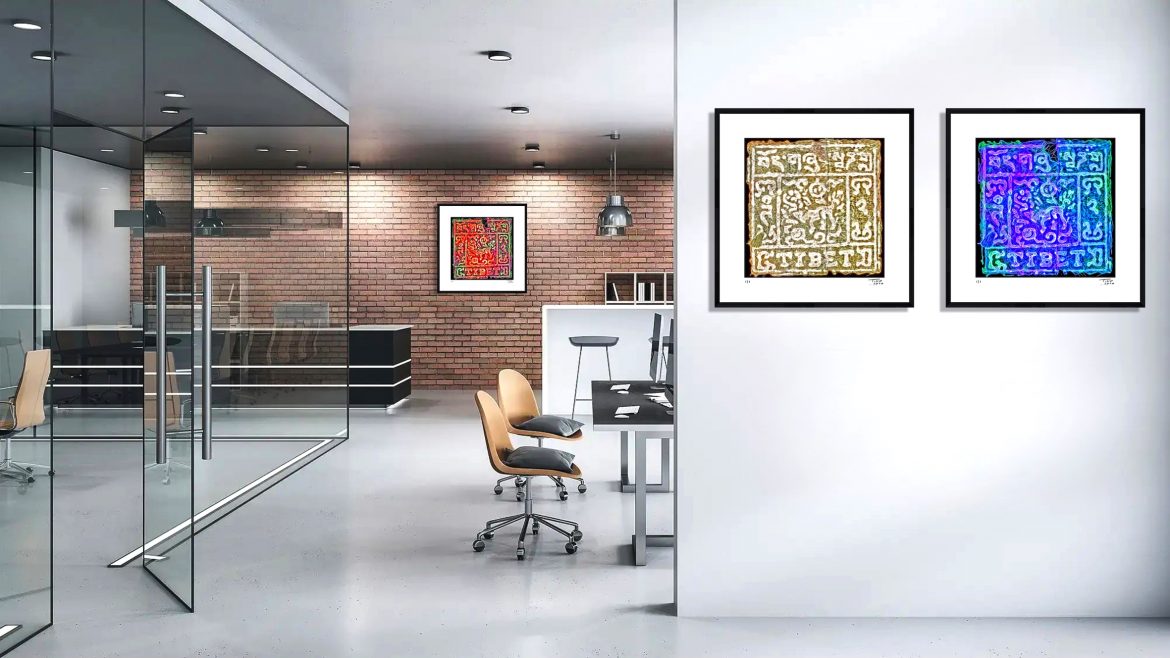
The Tibet ‘Snow Lion’ Prana Art Collection – Limited Edition of 250
Size 500mm x 500mm. Medium: Giclee Canson Baryta Gloss with choices of Black, White and Oak Frames, with Window mount & Museum Quality Glass. Includes Certificate of Authenticity, Digital Certificate Registration and Official ‘Snow Lion’ Prana Book.
See shop for details: https://shop.stampartist.co.uk/pages/fine-art
Limited Edition Artworks are available with this commission including edition numbers of 1 to 250. Each Artwork is handcrafted from the Crunch Time Commission collection and signed by the artist. The artworks are then ‘Authenticated’ with our RivetChain Digital Passport Certificate providing ‘Verified Provenance’ with the assurance of Trust Guaranteeing the artwork is an original by The Stamp Art Gallery.
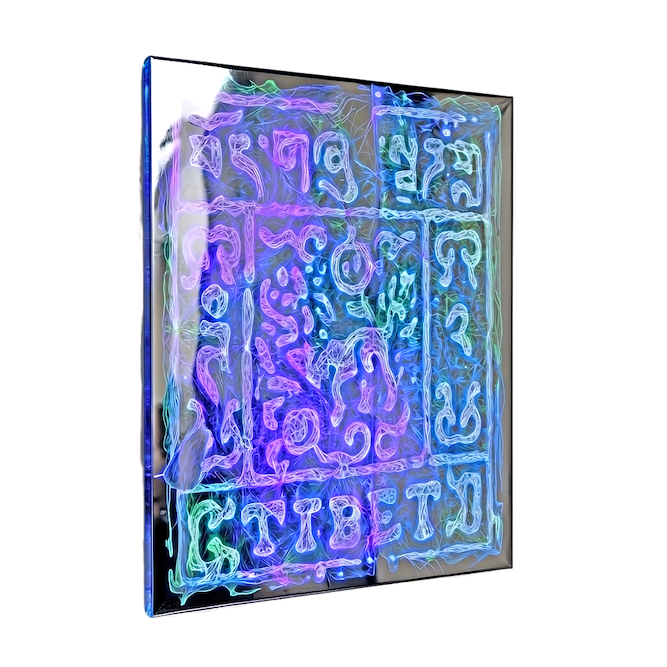
The Tibet ‘Snow Lion’ Prana Art Collection – Limited Edition of 500 (Acrylic Glass)
Size 609.6mm x 609.6mm. Medium: Frame Free Acrylic Glass with diamond polished edges, Invisible floating subframe with built-in hangman mounting system, Includes Certificate of Authenticity, Digital Certificate Registration and Official ‘Snow Lion’ Prana Book.
See shop for details: https://shop.stampartist.co.uk/pages/fine-art
This Commission offers our Book publishing solution for your organizations promotional use, internally and externally.

Contact us with your enquiry and we will be happy to help you.
Phone: 0330 133 8123
Email: info@stampartist.co.uk
© Stamp Art Gallery |Tino (Tino McKay) 2026 | Stamp design © Royal Mail Group Ltd 2026